
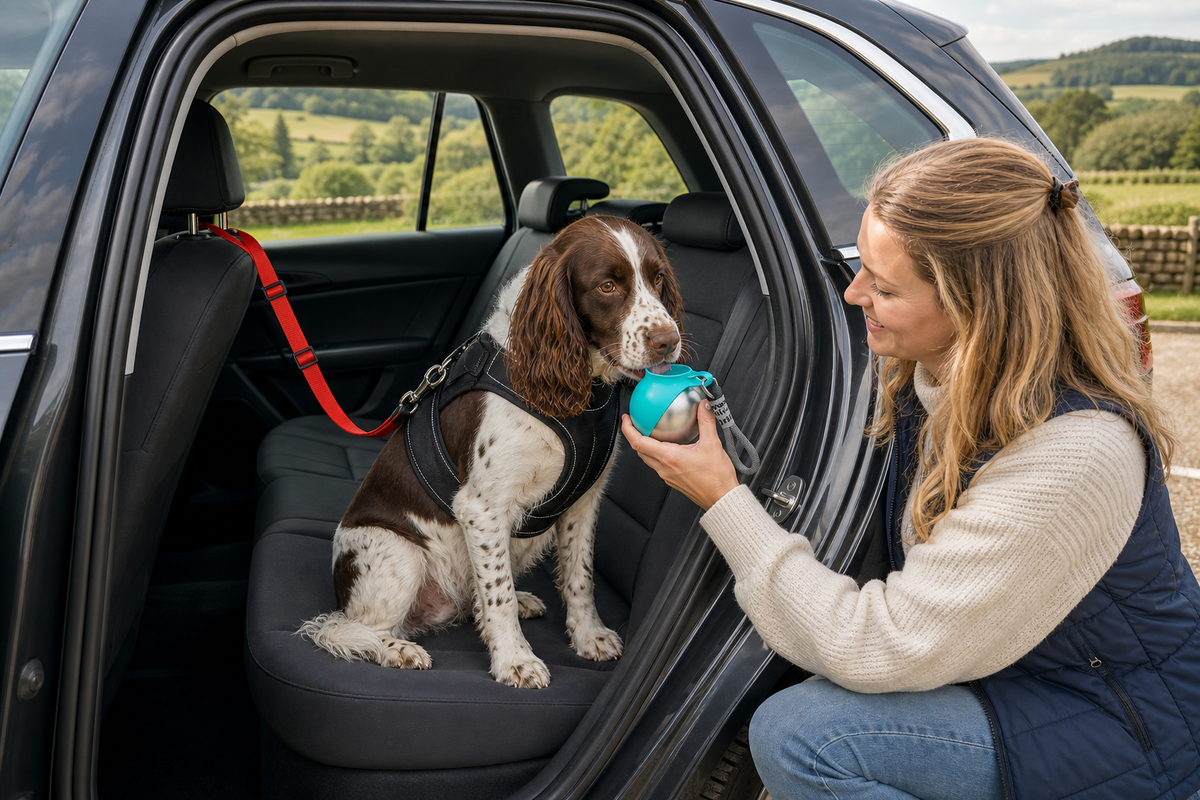
A car journey with a Spaniel can begin before the engine starts. There is the excited spin beside the door, the nose pressed towards every interesting bag and the firm belief that the front seat was reserved for them. A good dog car travel set-up turns that energy into a calmer, more predictable routine.
This UK guide covers restraint, harness connection, water, breaks and the small habits that help a Springer Spaniel settle for local trips, countryside walks and longer days out.
Dog car travel in the UK: the important starting point
Rule 57 of the Highway Code says dogs and other animals should be suitably restrained so they cannot distract the driver or injure themselves or others if the vehicle stops quickly. It gives seat belt harnesses, carriers, dog cages and dog guards as examples.
The right option depends on your vehicle, your dog and the journey. A tether can limit movement and help prevent a dog climbing forwards, but that does not automatically mean it has been crash tested. The PDSA car travel guide notes that pet restraints do not all carry the same testing evidence, so check the manufacturer's information if impact protection is a priority.
A practical dog car travel checklist
1. Choose the restraint before packing the car
Decide whether your dog will travel with a suitable harness and tether, in a carrier or crate, or behind an appropriate guard. Do not leave this choice until the boot is full and your Spaniel is waiting by the door.
2. Connect a tether to a body harness, never a collar
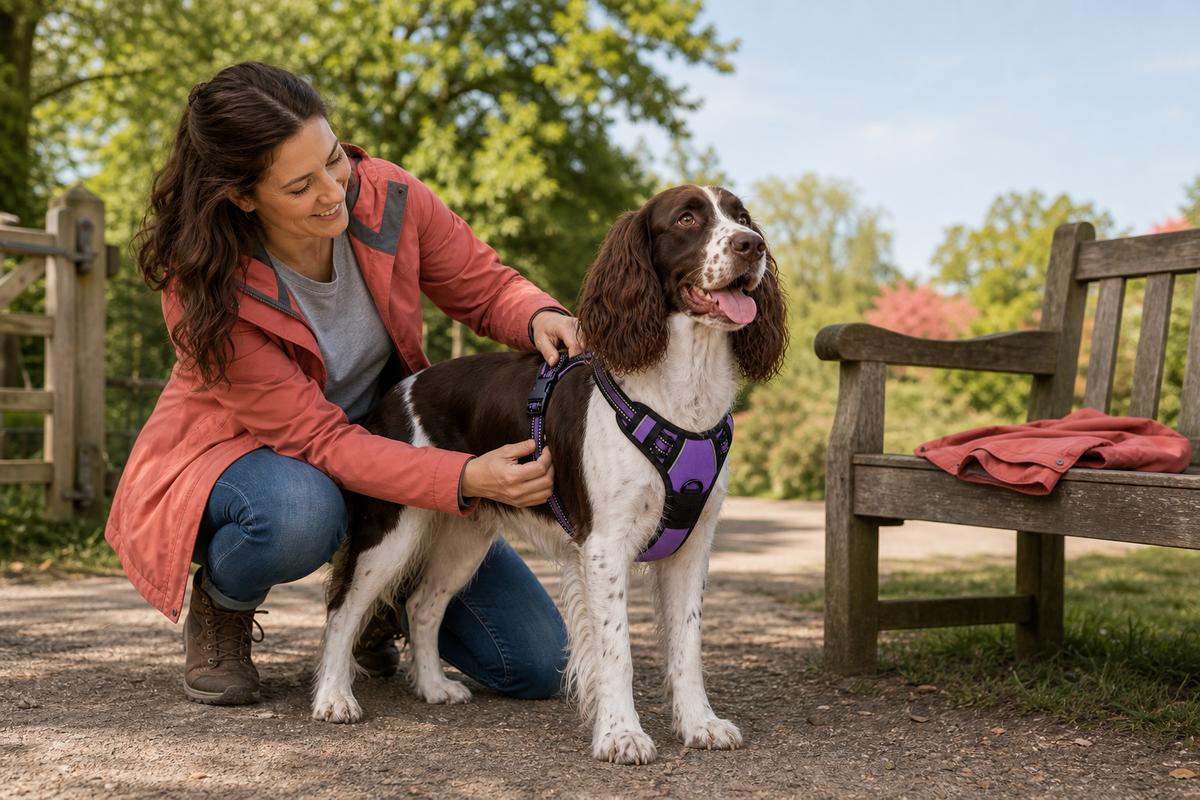
A sudden stop can put considerable force through the connection point. If you use a tether, attach it to the back of a correctly fitted body harness rather than directly to the dog's neck.
3. Limit roaming without preventing a comfortable position
Adjust the length so your dog can sit or lie down in the allocated space but cannot reach the driver, climb into the front or lean through an open window.
4. Check compatibility with the vehicle
Headrest-loop tethers require fixed, compatible headrest supports. Inspect the loop, buckle, adjuster, webbing and metal clip before every journey. If anything is frayed, bent or difficult to close, replace it.
5. Carry fresh water in a dog-friendly format
For longer outings and warm days, take enough fresh water for the planned route and unexpected delays. A compact bottle with an integrated drinking bowl keeps the set-up simpler than carrying a separate bottle and loose dish.
6. Plan breaks before your dog asks for one
Build stops into longer journeys so your dog can drink, toilet and move around safely on lead. Young, older or travel-sensitive dogs may need a different schedule, so follow your vet's guidance when necessary.
How to use the Pevvi Click & Go car tether
The Click & Go Adjustable Dog Car Tether uses a loop around compatible headrest supports rather than occupying the seat-belt buckle.
- Confirm the vehicle has a fixed, compatible headrest.
- Secure the loop around the headrest supports and close the quick-release fastening fully.
- Fit your dog's body harness and check it before entering the car.
- Clip the tether to the harness's back attachment point.
- Adjust the strap so your dog can settle but cannot roam across the car.
- Check the complete set-up again before closing the door.
The tether is a practical movement-limiting accessory. Pevvi does not claim that it is crash tested, and it should not be treated as a substitute for a certified restraint where verified impact testing is required.
Water without the bulky bowl
The Sip & Share 2-in-1 Travel Bottle carries 285 ml and opens into an integrated silicone drinking bowl. Its compact round form suits shorter walks and travel stops where a full bowl would be awkward.
Fill it with fresh water before leaving, offer drinks during planned stops and clean and dry the bottle after use. On long or hot journeys, treat 285 ml as one part of your water plan rather than assuming it will be enough for every dog or distance.
Helping an excitable Spaniel settle in the car
Make the first trips very ordinary
Begin with short, calm journeys rather than making every car ride the gateway to the most exciting walk of the week. Let your dog learn that getting in, settling and getting out can be predictable.
Use the same cue and the same place
Ask for a simple pause before entering the vehicle, guide your dog to the same allocated seat or area and connect the restraint in the same order. Repetition reduces frantic guesswork.
Protect the seat without creating a slippery surface
A fitted car cover or non-slip travel mat can make cleaning easier after wet walks. Make sure anything beneath your dog lies flat and does not interfere with the restraint.
Keep the temperature comfortable
Cars can heat up quickly. Never leave your dog unattended in a vehicle, and do not rely on a slightly open window to keep the interior safe.
Ask for help when travel is consistently difficult
Repeated drooling, vomiting, panic or refusal to enter the car deserves proper attention. Speak to your vet or a qualified behaviour professional rather than trying to push through the problem.
What to pack for a Spaniel day out
- A correctly fitted body harness.
- A compatible car restraint or travel crate.
- Your dog's normal walking lead.
- Fresh water and a drinking container.
- Poo bags and a small waste bag.
- A towel for wet ears, paws and feathering.
- Any food or medication required for the day.
- Your vet's details and identification information.
Dog car travel FAQs
Does my dog have to be restrained in a car in the UK?
The Highway Code says dogs and other animals should be suitably restrained so they cannot distract the driver or cause injury if the vehicle stops quickly. Read Rule 57 for the official wording.
Can I attach a dog car tether to a collar?
No. Attach a tether to the back connection point of a correctly fitted body harness, not directly to your dog's neck.
How long should a dog car tether be?
It should allow your dog to sit or lie down comfortably in their allocated space without reaching the driver, front seats or an open window. Recheck the adjustment in the actual vehicle.
Is a headrest tether crash tested?
Not necessarily. Product testing varies. Check the manufacturer's evidence and choose a specifically tested restraint if verified crash performance is important to you.
How can I keep my Springer calm on the way to a walk?
Practise short ordinary trips, use a consistent settling routine and avoid opening the door while your dog is surging forwards. If travel causes distress or sickness, ask your vet or a qualified behaviour professional for help.
A calmer start creates a better day out
The most useful dog car accessories solve small problems before they become big distractions. A well-fitted harness, compatible restraint, sensible tether length and fresh water give your Spaniel a clearer place in the routine. That means less scrambling at the back seat and more energy left for the adventure you actually planned.
Explore the Click & Go car tether and meet the compact Sip & Share bottle.

Leave a comment
This site is protected by hCaptcha and the hCaptcha Privacy Policy and Terms of Service apply.